

Throughout human history, the perception of gases and their colors has evolved through scientific discovery, technological advancements, and the expanding understanding of molecular behavior. From the early identification of common atmospheric gases to the intricate analysis of industrial emissions, the question “What color is gas?” transcends mere curiosity, touching on fundamental principles of chemistry, physics, and environmental science. This journey to decoding the visual and optical characteristics of gases has not only refined our scientific lexicon but also enhanced practical application across various industries—ranging from meteorology to aerospace engineering.
Origins and Historical Perspectives on Gas Observation

In the 18th century, the study of gases transitioned from philosophical speculation to empirical science, catalyzed heavily by the advent of experimental thermodynamics and gas analysis. Joseph Priestley’s experiments with oxygen in the 1770s marked a pivotal milestone, revealing a previously invisible component of our atmosphere. Before this, gases were largely perceived as transparent and colorless, a notion supported by the limited optical methods available at the time. It wasn’t until the 19th century, with the development of spectroscopy and improved lighting techniques, that scientists began to distinguish subtle optical differences among various gases.
Historically, the perception that gases are entirely transparent dominated the scientific narrative. Early chemists, such as Antoine Lavoisier, meticulously cataloged gases based on chemical reactivity rather than visual attributes. However, certain gases—like chlorine— stood out vividly, not for their transparency but for their distinct coloration and pungency, further cementing the awareness that gases can possess visual characteristics beyond just transparent cloudiness.
Optical Properties of Gases: The Nature of Color in Gaseous States
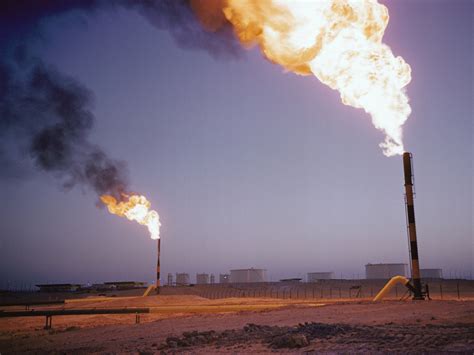
The fundamental reason most gases appear colorless lies in their molecular structure and the way they interact with light. When photons encounter gas molecules, absorption occurs at specific wavelengths tied to electronic transitions within the molecules. This absorption spectrum defines the gas’s color—or lack thereof—when illuminated under specific conditions. For most gases, the absorbance is confined to ultraviolet and infrared regions, which are invisible to human eyes, rendering them transparent in the visible spectrum.
Electronic Transitions and Light Absorption
At the molecular level, the color of a gas depends on whether it absorbs certain wavelengths of visible light. When molecules undergo electronic excitation, they can absorb particular portions of the spectrum. For example, nitrogen and oxygen—making up about 99% of Earth’s atmosphere—do not strongly absorb in the visible range, hence their colorlessness. Conversely, gases like nitrogen dioxide (NO₂) display intense brown coloration due to their broad absorption across the visible spectrum, giving them a distinctive hue that can be observed even in dilute concentrations.
| Relevant Category | Substantive Data |
|---|---|
| Color Observation | Most atmospheric gases are transparent or nearly so in visible light, making their inherent coloration invisible to the human eye. |
| Specific Gases | Nitrogen (N₂), Oxygen (O₂): Colorless; Chlorine (Cl₂): Pale yellow-green; Nitrogen dioxide (NO₂): Brown |
| Spectroscopic Techniques | Absorption spectra reveal subtle differences, e.g., NO₂ absorbs broadly in the visible, resulting in discernible coloration. |

The Role of Industrial and Environmental Gas Visuals
Gas coloration extends beyond the realm of pure science into practical applications like environmental monitoring, industrial safety, and atmospheric physics. For instance, the characteristic greenish hue of chlorine gas in leaks and the reddish-brown tint of nitrogen dioxide pollution serve as visual indicators of gas presence and concentration. In atmospheric science, the hue and opacity of volcanic plumes or urban smog reveal information about their composition and density.
Volcanic Emissions and Color
Volcanic gases such as sulfur dioxide (SO₂) and hydrogen sulfide (H₂S) exhibit particular coloration under specific conditions, which astronomers and geologists utilize for remote sensing. The yellowish sulfur deposits and the dark, smoky plumes that contain particulate matter overlaying these gases further complicate visual assessments, requiring advanced spectroscopic or satellite imaging for accurate analysis.
| Relevant Category | Substantive Data |
|---|---|
| Pollution Indicators | Color changes in atmospheric gases signal pollution levels, with NO₂ and SO₂ displaying distinct brownish and yellowish hues respectively. |
| Remote Sensing | Satellite imaging leverages spectral signatures to detect and monitor gas plumes across vast regions. |
Modern Technological Methods for Gas Detection and Visualization
While humans can rarely see gases directly due to their transparency, modern technologies have bridged this gap, revealing their presence through various visual and spectral markers. Instruments like laser-induced fluorescence (LIF), differential optical absorption spectroscopy (DOAS), and infrared imaging allow scientists to “see” gases by their unique spectral fingerprints, translating invisible gases into visual data streams.
Laser-Induced Fluorescence and Spectroscopy
Laser-induced fluorescence involves exciting molecules with laser light at specific wavelengths and detecting the emitted fluorescence. This method can visualize the spatial distribution of gases like methane and nitrogen oxides, producing vivid images that depict concentration gradients and plume pathways with remarkable clarity.
| Relevant Category | Substantive Data |
|---|---|
| Detection Techniques | LIF provides high spatial resolution visualizations of gas concentrations in real-time. |
| Environmental Monitoring | DOAS enables remote sensing of pollutants over large urban and industrial areas. |
| Infrared Imaging | Infrared cameras visualize temperature variations and gas plumes, especially useful in firefighting and industrial safety. |
Interdependencies Between Gas Color, Composition, and Environmental Impact

The coloration and optical properties of gases are intimately tied to their chemical makeup and environmental context. Changes in temperature, pressure, or chemical reactions can alter a gas’s spectral profile, influencing its apparent color. For example, atmospheric pollutants like ozone (O₃) can cause localized blueish hues in high-altitude clouds, while soot particles produce darkening and opacity in smog layers.
The interplay between a gas’s inherent properties and external conditions also underpins critical health and climate considerations. The presence of brownish nitrogen dioxide and its photosensitivity influence urban air quality, while greenhouse gases like methane and carbon dioxide have negligible optical color but dominate climate discussions due to their radiative effects.
Influence of External Factors on Gas Appearance
Factors such as sunlight, aerosols, and chemical reactions dynamically modify how gases appear visually. For example, sunlight scattering by fine particulate matter can tint the air an orange or yellow hue, masking the true color of underlying gases and complicating visual assessments.
| Relevant Category | Substantive Data |
|---|---|
| Environmental Effects | Soot and aerosols influence the color and opacity of air masses, affecting visibility and climate. |
| Chemical Interactions | Photochemical reactions modify gas compositions, leading to color changes like ozone layer depletion visible as a blueish glow or darkening of smoke plumes. |
Conclusion: The Chromatic Spectrum of Gases and Practical Implications
While most gases naturally appear colorless to humans due to their optical absorption characteristics, the exceptions—such as nitrogen dioxide, chlorine, and sulfur dioxide—highlight that gases can indeed possess vivid hues under certain conditions. Advances in spectral analysis and imaging technologies continue to enhance our ability to detect, visualize, and understand these invisible yet impactful components of our environment. The nuanced relationship between a gas’s composition, its physical state, and external influences emphasizes the complex visual and optical phenomena at play. Recognizing these properties not only deepens scientific understanding but also fortifies our capabilities in environmental monitoring, industrial safety, and atmospheric science, ensuring that what we cannot see directly is nonetheless discernible through the persistent progress of scientific innovation.