

When incorporating references into your writing, using parenthetical citations is an effective way to credit the original authors of the ideas, data, or quotes you're using. In the MLA (Modern Language Association) style, parenthetical citations are used to acknowledge the sources of your information within the text itself, which helps maintain the flow of your writing. This method involves placing relevant source information in parentheses after the referenced material.
Understanding MLA Parenthetical Citations

The MLA format is commonly used in the humanities, such as in literature, language, and cultural studies. Parenthetical citations in MLA typically include the author’s last name and the page number(s) where the information can be found. For example, if you’re citing a book by Jane Smith, the parenthetical citation would look like this: (Smith 24). If the source does not have an author, you would use a shortened version of the title in the parentheses: (“The Impact” 12).
Types of Parenthetical Citations in MLA
There are several scenarios to consider when using parenthetical citations in MLA style, each with its own formatting rules. For instance, when citing a source with one author, you include the author’s last name and the page number(s) in the parentheses, as mentioned earlier: (Smith 24). If the source has two authors, you include both last names, connected by “and,” and the page number(s): (Smith and Johnson 34-36). For sources with three or more authors, you list the first author’s last name followed by “et al.” and the page number(s): (Smith et al. 23).
| Citation Type | Example |
|---|---|
| One Author | (Smith 24) |
| Two Authors | (Smith and Johnson 34-36) |
| Three or More Authors | (Smith et al. 23) |
| No Author | ("The Impact" 12) |
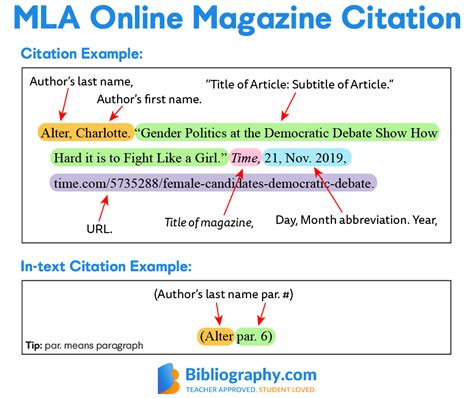
Integrating Parenthetical Citations into Your Writing

To effectively incorporate parenthetical citations into your text, it’s crucial to understand how they contribute to the clarity and credibility of your writing. By correctly citing your sources, you not only avoid plagiarism but also provide your readers with a clear path to the original material, which can further enrich their understanding of the topic. When integrating a quote or an idea from another source into your writing, consider how the parenthetical citation can be smoothly incorporated into your sentence structure. For example, “According to recent studies, the benefits of regular exercise are undeniable (Johnson 14), which supports the claim that physical activity should be a priority in daily life.”
Best Practices for Parenthetical Citations
A key aspect of using parenthetical citations effectively is ensuring that they are correctly formatted and placed within your text. The citation should appear at the end of the sentence or clause where the referenced material is used, before any punctuation marks. Additionally, when a source has no author, use a shortened version of the title in the parentheses, and for sources with no page numbers, use the author’s name only if available, or a shortened title if there is no author.
Key Points for MLA Parenthetical Citations
- Include the author's last name and page number(s) for sources with one author.
- Use both authors' last names for sources with two authors.
- List the first author's last name followed by "et al." for sources with three or more authors.
- Utilize a shortened title in the parentheses for sources with no author.
- Omit page numbers for sources without them, using the author's name if available.
In conclusion, mastering the use of parenthetical citations in MLA style is essential for academic writing in the humanities. By understanding the different scenarios and applying the guidelines correctly, you can ensure that your writing is not only well-informed but also properly credited, enhancing your credibility and the clarity of your arguments.
What is the purpose of using parenthetical citations in MLA style?
+The primary purpose of using parenthetical citations in MLA style is to provide a clear and concise way to credit the original authors of the ideas, data, or quotes used in your writing, thereby avoiding plagiarism and allowing readers to locate the source material easily.
How do I format a parenthetical citation for a source with two authors in MLA style?
+For a source with two authors, you would include both authors’ last names connected by “and” and the page number(s) in the parentheses: (Smith and Johnson 34-36).
What if the source I am citing does not have an author?
+If the source does not have an author, you would use a shortened version of the title in the parentheses: (“The Impact” 12). If there are no page numbers, you would use the title only.
Related Terms:
- No Author
- Parenthetical citation mla example
- mla in text citation website
- MLA citation generator
- MLA in-text citation article
- MLA in-text citation multiple authors