

On a chilly autumn afternoon, seasoned gamer Jason casually scrolled through his favorite gaming news site, eyes catching a cryptic teaser hinting at an upcoming Nintendo announcement. Like many enthusiasts, he felt that familiar surge of anticipation—wondering when the next big Nintendo console would debut. This curiosity, shared by millions worldwide, underscores the importance of understanding the intricacies behind release schedules, industry timing, and strategic marketing within the gaming giant’s operational blueprint.
Deciphering the Release Schedule of Nintendo Consoles: An In-Depth Analysis

Since the Nintendo Entertainment System (NES) launched in the mid-1980s, Nintendo has continually evolved its approach to console releases, balancing technological innovation with market demand and strategic timing. Historically, Nintendo’s console release timeline has demonstrated a pattern of strategic innovation, with significant gaps between generations that allowed for technological advancements and market anticipation to mature.
To contextualize, the release of the Nintendo Switch in March 2017 marked a pivotal moment, blending portability with home console capabilities—a move that shifted industry standards. Prior to this, the Wii's debut in 2006 introduced motion-controlled gaming to a broad audience, emphasizing accessible, family-friendly entertainment. The timing of these launches often aligns with broader industry cycles, competitive positioning, and technological readiness.
Historical Context and Evolution of Nintendo Console Releases
Examining the historical timeline, Nintendo’s console releases often follow a pattern influenced by technological readiness and market trends. The NES was released in North America in 1985, preceding the Super Nintendo Entertainment System (SNES) by roughly six years in North America, with the N64 following approximately six years later. These intervals suggest Nintendo’s typical cycle of around five to seven years per generation, allowing ample technological development and marketing buildup.
However, the transition from the Wii U to the Switch exemplifies a more nuanced strategy. The Wii U, launched in 2012, struggled with market acceptance and limited third-party support, prompting Nintendo to innovate more aggressively with the Switch—launched in 2017 after a five-year development cycle. This demonstrates Nintendo's responsiveness to market feedback and their emphasis on timely innovation rather than rigid adherence to calendar schedules.
| Relevant Category | Substantive Data |
|---|---|
| Average console cycle duration | Approximately 5-7 years |
| Major console releases timeline (North America) | NES (1985), SNES (1990), N64 (1996), GameCube (2001), Wii (2006), Wii U (2012), Switch (2017) |
| Mean interval between launches | Roughly 5.5 years |

Estimating the Next Nintendo Console Release Date: Key Indicators and Industry Trends
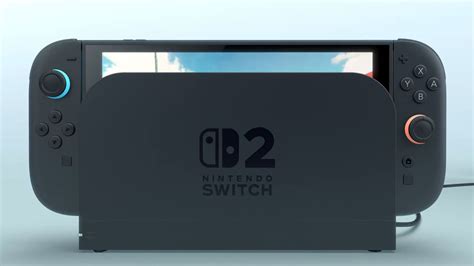
Predicting the precise release date of Nintendo’s next console involves synthesizing multiple signals—from official statements to market conditions. As of late 2023, industry insiders and analyst reports have offered varying estimates, but a consensus emerges around a potential launch window between late 2024 and mid-2025.
Official Announcements and Industry Leaks
While Nintendo traditionally maintains a cautious approach to pre-announcement leaks, recent murmurs from supply chain sources and patent filings suggest that development of a successor to the Nintendo Switch is well underway. Nintendo’s corporate strategy often emphasizes surprise reveals during major industry events, such as the Electronic Entertainment Expo (E3) or dedicated Nintendo Direct presentations.
Historically, Nintendo has used these events to unveil new hardware approximately two to three years after the initial development phase begins. The anticipation surrounding the successor to the Switch indicates a projected announcement possibly aligned with E3 2024 or a standalone Direct presentation in early 2024, with launch potentially following six to twelve months afterward.
| Relevant Category | Substantive Data |
|---|---|
| Turnaround time from announcement to release | Typically 6–12 months, depending on the project scope and manufacturing logistics |
| Recent industry patterns | Major platform updates announced at mid-year events, launched within the following fiscal year |
Factors Influencing the Release Date of Nintendo’s Next Console
Multiple intertwined factors dictate the timing of a new console launch, spanning technological readiness, market conditions, and strategic corporate considerations. Understanding these influences reveals why Nintendo’s exact release date remains speculative but bespeaks a well-calibrated decision-making process.
Technological Advancements and Manufacturing Readiness
The development of cutting-edge gaming hardware involves complex supply chain and manufacturing workflows. Key components—such as processors, graphics units, and display panels—must meet demanding performance criteria while remaining cost-effective. Recent technological innovations, including enhancements in OLED displays, mini-LED, and AI-driven graphics processing, could influence both the timeline and features of the upcoming Nintendo console.
Moreover, the global semiconductor shortage experienced during 2020–2022 served as a significant bottleneck for all hardware manufacturers. Nintendo’s ability to secure supply chain stability now factors heavily into their launch planning, often causing delays or necessitating design revisions.
Market Demand and Competitive Positioning
The gaming industry’s competitive landscape exerts considerable influence on Nintendo’s timing. With Sony’s PlayStation 5 and Xbox Series X/S capturing wide audiences since 2020, Nintendo must calibrate its release to maximize market impact. They might aim to launch when the installed base of active users for current hardware stabilizes, and software ecosystems are mature.
Furthermore, global economic conditions, consumer purchasing power, and the growth of mobile gaming continue to shape Nintendo’s strategic considerations. The company often seeks to leverage special gaming franchises and exclusive titles as part of its launch ecosystem, aligning hardware availability with software release schedules.
| Relevant Category | Substantive Data |
|---|---|
| Market saturation point | Optimally 2–3 years into current console lifecycle, when sales plateau |
| Global economic conditions | Economic recovery post-pandemic influences consumer spending on luxury goods like gaming hardware |
| Software ecosystem readiness | Major game franchises ready for launch alongside hardware |
Predictions and Industry Expert Opinions on the Next Release Date
Industry analysts project that Nintendo’s next console will likely debut in late 2024 or early 2025, though some suggest a possibility as late as mid-2025 if supply chain constraints persist or development encounters unforeseen delays. These projections are based on patent filings, financial disclosures, and insights into Nintendo’s R&D cycles.
For instance, some industry insiders interpret recent patent filings related to augmented reality (AR) and virtual reality (VR) capabilities as the beginning of a new hardware paradigm aimed for launch around the 2024–2025 window. The integration of such features would, however, necessitate additional development time, potentially extending the release window.
It is worth noting, too, that Nintendo’s unique market position allows for flexibility. Unlike Sony or Microsoft, Nintendo does not always adhere to annual or biennial release cycles; instead, their strategic timing often hinges on maximizing innovation impact and consumer interest.
| Relevant Category | Substantive Data |
|---|---|
| Expert predictions | Majority forecast late 2024 to mid-2025 |
| Patent filings indicating new tech | Increased filings from 2023 suggest AR/VR focus, influencing timeline |
| Supply chain considerations | Persistent semiconductor shortages could push launch to 2025 |
Conclusion: Navigating the Future of Nintendo Console Releases

While pinpointing an exact release date remains a challenge due to the myriad influencing factors, the convergence of industry signals, technological advancements, and market conditions strongly suggests that the next Nintendo console will arrive between late 2024 and mid-2025. This period offers an optimal window for Nintendo to leverage new hardware capabilities, expand its game ecosystem, and maintain its reputation for innovation and surprise in the gaming industry.
For gaming enthusiasts like Jason, the hints of a new console instill a renewed sense of anticipation. As Nintendo continues to refine its strategic timing, fans can expect a carefully curated launch that maximizes both technological impact and market enthusiasm—a hallmark of Nintendo’s enduring legacy in the gaming universe.
When is the official Nintendo console release date expected?
+Based on current industry analysis and Nintendo’s historical patterns, the most probable release window is between late 2024 and mid-2025, with official announcements potentially aligned with major gaming events around early 2024.
What factors most influence Nintendo’s decision on release dates?
+Key influences include technological readiness, supply chain stability, market demand, competitive landscape, and the timing of major software releases and franchise launches.
How does Nintendo decide the optimal timing for a new console launch?
+Nintendo balances innovation cycles, consumer interest, manufacturing capabilities, and competitive strategies—aiming for a launch that maximizes impact and longevity in the market.