
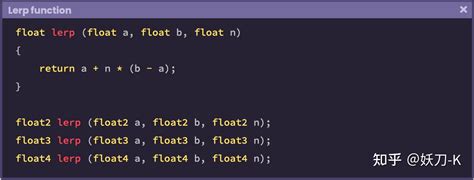
The Lerp function, short for linear interpolation, is a fundamental concept in mathematics and computer science, widely used in various fields such as game development, animation, and data analysis. It allows for the calculation of a value between two known values based on a given fraction, facilitating smooth transitions and interpolations. For developers and programmers, mastering the Lerp function is crucial for creating realistic animations, simulations, and transitions in their applications. Here, we will delve into 5 essential tips for using the Lerp function effectively, exploring its applications, and understanding its underlying mechanics.
Key Points
- Understanding the basic syntax and application of the Lerp function
- Utilizing Lerp for animation and smoothing in game development and interactive applications
- Applying Lerp in data analysis for trend prediction and interpolation
- Mastering the use of Lerp in color transitions and gradient effects
- Optimizing Lerp function for performance in real-time applications
Tip 1: Understanding the Basics of Lerp

The Lerp function is defined as Lerp(a, b, t) = a + (b - a) * t, where a and b are the two values between which the interpolation is performed, and t is the fraction of the way through the interpolation, ranging from 0 to 1. When t equals 0, the function returns a; when t equals 1, it returns b. Understanding this basic formula is key to applying Lerp effectively in various contexts.
Practical Application in Animation
In the realm of animation and game development, the Lerp function is invaluable for creating smooth and realistic movements. By interpolating between two states (positions, scales, rotations) over time, developers can achieve a high level of realism and engagement in their interactive applications. For example, in a game, using Lerp to smoothly transition a character from a standing position to a running position based on user input enhances the overall gaming experience.
| Application | Description |
|---|---|
| Game Development | Smooth character movements, camera transitions |
| Animation | Keyframe animation, tweening |
| Data Analysis | Trend prediction, data interpolation |

Tip 2: Utilizing Lerp for Smoothing and Easing

Beyond basic interpolation, Lerp can be used to implement smoothing and easing functions, which are crucial for enhancing user experience in interactive applications. Smoothing helps in reducing abrupt changes, while easing functions (like ease-in, ease-out) make animations more natural by varying the speed of the interpolation. This is particularly useful in UI/UX design, where smooth transitions between different states of an application can significantly impact user engagement and satisfaction.
Color Transitions and Gradient Effects
The Lerp function is not limited to numerical values; it can also be applied to colors, enabling smooth transitions between different hues. This is especially useful in graphic design and digital art, where gradient effects are often used to create visually appealing compositions. By interpolating between two colors based on a fraction, designers can create a spectrum of colors, adding depth and complexity to their designs.
Tip 3: Applying Lerp in Data Analysis
In the context of data analysis, the Lerp function can be used for trend prediction and data interpolation. By interpolating between known data points, analysts can estimate values at unknown points, helping to identify trends and patterns in the data. This application of Lerp is particularly useful in fields like finance, where predicting stock prices or economic trends is crucial for making informed decisions.
Real-World Examples
A practical example of using Lerp in data analysis is in predicting customer behavior based on historical sales data. By interpolating between different sales figures over time, businesses can forecast future sales trends, allowing for more accurate planning and resource allocation. Similarly, in environmental science, Lerp can be used to interpolate between measured pollution levels at different locations, helping to create detailed maps of pollution distribution.
Tip 4: Mastering Lerp for Performance Optimization
In real-time applications, such as video games or simulations, performance optimization is critical. The Lerp function, while powerful, can be computationally intensive if not used efficiently. Techniques like caching frequently used Lerp values, using approximations for non-critical interpolations, and leveraging hardware capabilities (like GPU acceleration) can significantly improve performance without compromising on the quality of the interpolation.
Best Practices for Optimization
Developers should focus on identifying performance bottlenecks in their code and applying optimization techniques judiciously. For instance, in a game engine, using Lerp for every small animation might be unnecessary and could lead to performance issues. Instead, reserving Lerp for critical animations and using simpler interpolation methods for less important ones can help maintain a balance between visual quality and performance.
Tip 5: Advanced Lerp Techniques

Beyond its basic application, the Lerp function can be modified and extended to achieve more complex interpolation effects. For example, using a non-linear interpolation function (like a sine or cosine curve) instead of the linear t value can create more sophisticated easing effects. Additionally, combining Lerp with other mathematical functions can lead to the creation of intricate patterns and animations, pushing the boundaries of what is possible in interactive and dynamic content creation.
What is the primary use of the Lerp function in game development?
+The primary use of the Lerp function in game development is to create smooth and realistic movements and transitions, enhancing the overall gaming experience.
How can Lerp be applied in data analysis?
+Lerp can be used in data analysis for trend prediction and data interpolation, helping to estimate values at unknown points and identify patterns in the data.
What are some tips for optimizing the Lerp function for performance?
+Tips for optimizing the Lerp function include caching frequently used values, using approximations for non-critical interpolations, and leveraging hardware capabilities like GPU acceleration.
In conclusion, the Lerp function is a versatile tool with a wide range of applications across different fields. By understanding its basics, applying it in various contexts, and optimizing its use for performance, developers and analysts can unlock new levels of creativity and efficiency in their work. Whether it’s creating engaging animations, predicting trends, or enhancing user experience, mastering the Lerp function is an essential skill for anyone looking to push the boundaries of what is possible in digital content creation and analysis.
