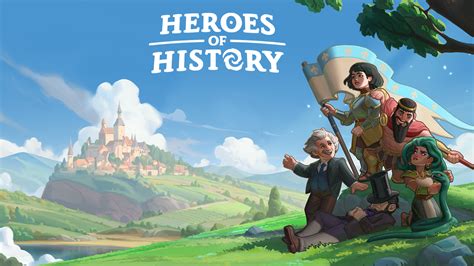
History games have been a staple of educational and entertainment platforms for decades, offering a unique blend of learning and fun. These games provide an immersive experience, allowing players to explore historical events, eras, and cultures in a highly engaging manner. From the earliest civilizations to modern times, history games cater to a wide range of interests and age groups, making them an indispensable tool for educators and an enjoyable pastime for gamers.
Key Points
- History games offer a blend of education and entertainment, making learning fun and engaging.
- These games cover a wide range of historical periods and themes, from ancient civilizations to modern events.
- History games can be used as an educational tool, promoting historical awareness and critical thinking.
- They are available on various platforms, including PCs, consoles, and mobile devices, making them accessible to a broad audience.
- Some history games focus on strategy and management, while others emphasize exploration, puzzle-solving, or role-playing.
Types of History Games

History games can be categorized into several genres, each offering a unique perspective on historical events. Strategy games, for example, challenge players to manage resources, build empires, and make tactical decisions that impact the course of history. Empire-building games like “Age of Empires” and “Civilization” are prime examples of this genre, where players guide their civilizations through different ages, from ancient to modern times.
Historical Simulation Games
Historical simulation games aim to recreate historical events or periods with a high degree of accuracy. These games often focus on specific aspects of history, such as military campaigns, political intrigues, or social movements. Hearts of Iron, a grand strategy game set in World War II, is a notable example, allowing players to control any nation during the war and make decisions that can alter the course of history.
| Game Title | Historical Period | Gameplay Focus |
|---|---|---|
| Assassin's Creed: Odyssey | Ancient Greece | Action-Adventure, Role-Playing |
| Call of Duty: WWII | World War II | First-Person Shooter |
| Civilization VI | From Ancient to Modern | Turn-Based Strategy |
| This War of Mine | Modern Conflict | Survival, Strategy |
| Europa Universalis IV | Renaissance to Early Modern | Grand Strategy |

Impact and Educational Value

The impact of history games on education and cultural awareness cannot be overstated. They provide a platform for experiential learning, allowing players to explore historical events in a highly interactive and immersive environment. This can lead to a more nuanced understanding of historical complexities and a greater appreciation for the cultural and social contexts of different eras.
Challenges and Limitations
Despite their potential, history games also face challenges and limitations. Historical accuracy is a significant concern, as games must balance factual representation with the need for engaging gameplay. Moreover, the interpretation of historical events can be subjective, leading to potential controversies and criticisms regarding the portrayal of certain historical periods or figures.
In conclusion, history games offer a dynamic and engaging way to explore and learn about the past. With their diverse range of genres, historical periods, and gameplay mechanics, these games cater to a wide audience, from casual gamers to history enthusiasts and educators. As technology continues to evolve, the potential for history games to educate, entertain, and inspire new generations of players and learners is vast and promising.
What makes history games educational?
+History games are educational because they provide an immersive and interactive way to learn about historical events, cultures, and societies. They encourage critical thinking, problem-solving, and historical empathy, making learning a fun and engaging experience.
How accurate are history games?
+The accuracy of history games can vary. While some games strive for historical accuracy, others may take creative liberties to enhance gameplay or storytelling. It’s essential to approach history games with a critical perspective, recognizing both their educational value and potential limitations.
Can history games be used in educational settings?
+Yes, history games can be a valuable tool in educational settings. They can supplement traditional teaching methods, providing an interactive and engaging way to learn about history. Educators can use these games to stimulate discussion, encourage critical thinking, and promote a deeper understanding of historical concepts and events.