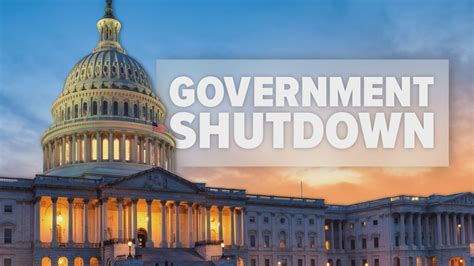
The impact of a government shutdown extends far beyond the halls of politics and policy-making, directly affecting the lives of regular citizens in numerous ways. When the government shuts down, it triggers a cascade of consequences that disrupt essential services, economic activities, and the daily lives of people across the nation.
Financial Turmoil and Economic Uncertainty
One of the most immediate and severe effects of a government shutdown is the financial turmoil it creates. Many federal employees, including those from critical agencies like the Internal Revenue Service (IRS) and the Federal Aviation Administration (FAA), are furloughed, meaning they are temporarily laid off and prohibited from working. These furloughed employees face significant financial strain, as they often receive no pay during the shutdown, despite continuing to perform essential duties.
For instance, during the 35-day partial government shutdown in 2018-2019, approximately 800,000 federal employees were either furloughed or required to work without pay. This led to a staggering loss of $11 billion in wages, with many employees relying on credit cards, loans, and savings to make ends meet.
Moreover, the economic uncertainty caused by government shutdowns extends beyond federal employees. Businesses that rely on government contracts or grants may experience delays or disruptions, impacting their operations and potentially leading to job losses. Small businesses, in particular, are vulnerable during shutdowns, as they often lack the financial cushion to weather extended periods without government support.
| Industry | Economic Impact |
|---|---|
| Construction | Delays in federal infrastructure projects affect contractors and workers. |
| Agriculture | Farmers may face delays in receiving critical subsidies and support. |
| Healthcare | Hospitals and research institutions may experience funding cuts, impacting patient care and medical research. |
Disrupted Public Services and Safety Risks
The consequences of a government shutdown are not limited to financial woes. Essential public services, which citizens rely on daily, are often disrupted or reduced during shutdowns.
For example, the National Park Service, which manages over 400 parks, monuments, and historic sites across the country, is significantly impacted. During shutdowns, national parks may remain open, but with limited staffing, leading to issues such as overflowing trash, vandalism, and potential safety hazards. In the 2018-2019 shutdown, the National Park Service faced a $200 million backlog in maintenance costs, highlighting the long-term effects on these cherished public spaces.
Furthermore, critical agencies like the Centers for Disease Control and Prevention (CDC) and the Food and Drug Administration (FDA) may have their operations curtailed. This can lead to delays in public health responses, such as disease outbreak investigations, and hinder the approval of new drugs and medical devices, impacting patient care.
The shutdown also affects the functioning of the Federal Emergency Management Agency (FEMA), which provides disaster relief and assistance. During a shutdown, FEMA's response capabilities may be limited, potentially leaving communities vulnerable during natural disasters or emergency situations.
Impacts on Social Programs and Community Well-Being
Government shutdowns disproportionately affect vulnerable populations who rely on social safety net programs. These programs, such as the Supplemental Nutrition Assistance Program (SNAP), Medicaid, and housing assistance, provide vital support to low-income families, seniors, and individuals with disabilities.
During shutdowns, these programs may experience delays in funding and administration, causing uncertainty and hardship for those who depend on them. For instance, in the 2013 government shutdown, some states had to consider using their own funds to cover the costs of Medicaid services, straining their budgets and potentially impacting access to healthcare for low-income individuals.
Additionally, programs that support veterans, such as the Department of Veterans Affairs (VA), may face disruptions. The VA provides healthcare, disability benefits, and other services to millions of veterans, and a shutdown can lead to delays in processing claims and providing timely care, affecting the well-being of those who have served our nation.
Long-Term Consequences and Future Implications
The effects of a government shutdown are not confined to the duration of the shutdown itself. The long-term consequences can linger for years, impacting the economy, public trust, and the overall functioning of government.
Economically, the disruptions caused by shutdowns can lead to a loss of productivity, as businesses and individuals face uncertainty and delays. This can result in reduced economic growth and job creation, impacting the country's overall prosperity.
Moreover, the erosion of public trust in government institutions is a significant concern. Repeated shutdowns can lead to a sense of frustration and cynicism among citizens, potentially undermining their faith in the democratic process and the ability of government to effectively serve its people.
In terms of future implications, government shutdowns can create a cycle of dysfunction. They can lead to further political polarization, as lawmakers and parties use shutdowns as bargaining chips in policy debates. This can make it increasingly difficult to reach consensus on critical issues, impacting the country's ability to address long-term challenges and plan for the future.
How often do government shutdowns occur, and how long do they typically last?
+Government shutdowns have occurred with varying frequency in recent decades. The duration of shutdowns can range from a few days to several weeks or even months. The longest shutdown in U.S. history lasted 35 days, from December 22, 2018, to January 25, 2019.
Are all government services affected during a shutdown?
+No, essential services, such as law enforcement, national security, and certain healthcare services, are typically exempted from shutdowns. However, many other government operations, including parks, museums, and non-essential federal agencies, may be affected.
How do government shutdowns impact the federal budget and debt ceiling negotiations?
+Government shutdowns often occur due to disagreements over the federal budget and debt ceiling. Shutdowns can create a sense of urgency to resolve these issues, but they can also complicate negotiations by adding uncertainty and political tension.