
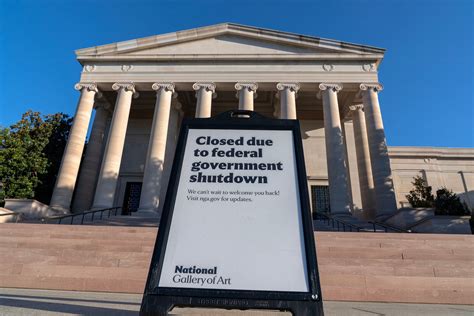
In recent years, the concept of a government shutdown has become a topic of great concern and intrigue for citizens, politicians, and economists alike. A government shutdown occurs when the federal government of a country, in this case, the United States, temporarily ceases its non-essential operations due to a failure to pass a funding bill. This event can have significant impacts on various aspects of daily life and the economy, making it an important phenomenon to understand.
Understanding the Mechanics of a Government Shutdown
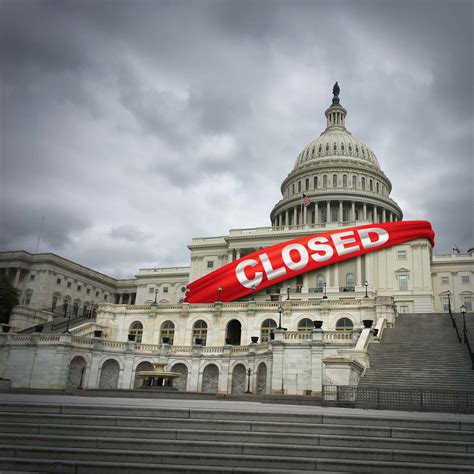
A government shutdown is typically triggered when the legislative branch, Congress, fails to pass and present a funding bill, also known as an appropriations bill, to the executive branch for approval. This bill outlines the budget and funding allocations for various federal agencies and programs for the upcoming fiscal year. If Congress cannot reach an agreement and pass this crucial legislation by the deadline, a shutdown ensues.
During a shutdown, non-essential government services and operations are suspended. This includes the closure of national parks, museums, and certain federal offices. Essential services, such as law enforcement, emergency response, and critical healthcare facilities, continue to operate, albeit often with reduced staffing and resources.
The duration of a shutdown can vary, ranging from a few days to several weeks or even months. The impact of a prolonged shutdown can be profound, affecting millions of federal employees and contractors, as well as the overall economy. It can result in furloughs, delayed payments, and disruptions to critical government functions.
The Historical Context of Government Shutdowns
Government shutdowns are not a recent phenomenon. The United States has experienced multiple shutdowns throughout its history, with varying degrees of impact. The first shutdown occurred in 1976, lasting only a few hours, while the longest shutdown in history, from December 2018 to January 2019, lasted a record-breaking 35 days.
Historically, government shutdowns have been triggered by disputes over budgetary matters, such as funding levels, spending priorities, and controversial policy provisions attached to the appropriations bill. These disputes often revolve around ideological differences between political parties, making them a common tool in political negotiations and power struggles.
Notable examples of government shutdowns include the 1995-1996 shutdowns during the Clinton administration, which were largely attributed to disagreements over budget deficits and Medicare funding. More recently, the 2013 shutdown was a result of conflicts over the Affordable Care Act, commonly known as Obamacare.
The Impact on Federal Employees and Contractors
One of the most visible and immediate impacts of a government shutdown is felt by federal employees and contractors. During a shutdown, non-essential personnel are typically furloughed, meaning they are placed on temporary leave without pay. Essential employees, such as those in law enforcement or critical infrastructure roles, are expected to continue working without pay until the shutdown is resolved.
The financial strain on furloughed employees can be significant. Many federal workers are forced to make difficult decisions, such as delaying bill payments, seeking alternative employment, or even tapping into retirement savings to make ends meet. The uncertainty surrounding the duration of a shutdown adds to the stress and anxiety experienced by these individuals and their families.
Contractors, who often provide critical services to federal agencies, also face significant challenges during a shutdown. They may be unable to continue their work, leading to lost revenue and potential job losses. The ripple effect of a government shutdown extends beyond federal employees, impacting businesses and communities that rely on federal contracts for their livelihood.
Economic Consequences and Wider Effects
The economic consequences of a government shutdown can be far-reaching. A shutdown disrupts government operations and services, leading to a reduction in economic activity and potential losses for businesses that rely on government contracts or services. The impact can be particularly severe for small businesses and those in sectors closely tied to federal spending.
Additionally, a government shutdown can affect consumer confidence and investment. Uncertainty surrounding the duration and resolution of a shutdown may lead to decreased consumer spending and business investment, further impacting economic growth. The disruption to government services can also have long-term effects, such as delays in processing loan applications, issuing permits, or approving regulatory measures, which can hinder business operations and development.
The wider effects of a government shutdown extend beyond the economy. It can impact public health and safety, with reduced staffing in agencies responsible for food safety inspections, disease control, and emergency management. Environmental protection agencies may also face challenges in monitoring and enforcing regulations, potentially leading to increased pollution and environmental risks.
Resolving a Government Shutdown: The Political Process

Resolving a government shutdown requires a political agreement between the legislative and executive branches. This often involves intense negotiations and compromise. The specific mechanisms for ending a shutdown can vary depending on the circumstances and the political dynamics at play.
In some cases, Congress may pass a short-term funding bill, known as a continuing resolution, to provide temporary funding and allow for further negotiations. This resolution maintains funding at the previous year's levels, avoiding immediate disruptions to essential services. However, this is typically seen as a temporary solution, as it does not address the underlying budgetary disagreements.
To fully resolve a shutdown, Congress must pass a new appropriations bill that is acceptable to both chambers and the executive branch. This bill will outline the funding levels and allocations for the upcoming fiscal year, addressing the disputes that triggered the shutdown. The process can be lengthy and complex, often involving intense political posturing and negotiations behind closed doors.
Future Implications and Preventative Measures
The frequent occurrence of government shutdowns in recent years has led to calls for reform and the implementation of preventative measures. Some proposed solutions include automatic continuing resolutions, which would provide temporary funding in the absence of an appropriations bill, or triggering automatic budget cuts if a shutdown occurs.
Additionally, there have been discussions about reforming the budget process itself, aiming to streamline and simplify the appropriations process. This could involve setting clear deadlines, implementing budget caps, and establishing a more collaborative approach between the legislative and executive branches.
However, the political realities and ideological differences that often trigger shutdowns make comprehensive reform a challenging endeavor. The potential for future shutdowns remains a concern, especially as budgetary disputes and political polarization continue to shape the landscape of American politics.
| Shutdown Period | Duration | Impact |
|---|---|---|
| 1995-1996 | 21 days | Budget disputes and Medicare funding |
| 2013 | 16 days | Disagreements over Affordable Care Act |
| 2018-2019 | 35 days | Border wall funding and immigration policy |
What happens to federal employees during a shutdown?
+During a government shutdown, non-essential federal employees are typically furloughed, meaning they are placed on temporary leave without pay. Essential employees continue to work without pay until the shutdown is resolved. The financial strain on furloughed employees can be significant, leading to delayed bill payments and potential financial hardships.
How does a government shutdown impact the economy?
+A government shutdown disrupts economic activity by suspending non-essential government services and contracts. This can lead to reduced business revenue, particularly for small businesses and those reliant on federal spending. It can also impact consumer confidence and investment, potentially hindering economic growth.
What are the potential long-term effects of a government shutdown?
+A prolonged government shutdown can have long-term effects on various sectors. It may result in delays in regulatory approvals, loan processing, and infrastructure projects. Additionally, the disruption to government services can impact public health, safety, and environmental protection, potentially leading to increased risks and challenges.